
Editor’s note: The Montana Department of Natural Resources and Conservation (DNRC) is committed to ensuring Montana’s land and water resources provide benefits for present and future generations. This story was originally published by the DNRC in October 2025 as part of the agency’s series of Montana Forest Action Plan project highlights. To learn more about the Forest Action Plan and read about other projects, visit DNRC’s Montana Forest Action Plan page. All images in this blog post are credited to the DNRC.
In Custer County, fuel reduction work on county, private and state trust land is a landscape-scale effort.
“Where do I even start?” is the most common question Andy Miller receives from landowners who take on fuel reduction projects for the first time.
That’s where The Montana Department of Natural Resources and Conservation (DNRC) service foresters, like Miller, come in. Based in Miles City, Miller serves as a local contact for private landowners and local municipalities, providing site visits and helping landowners make informed decisions about wildfire mitigation and forest or rangeland health treatments.
In response to landowners’ initial apprehension, Miller likes to assure them: “To keep costs low and work efficient, we aim to treat the least number of acres that’ll do the most amount of good.”
For over a decade, Miller and his colleagues at the DNRC Eastern Land Office have been doing just that. They have tackled fuel reduction work in priority areas and those directly adjacent in a cross-boundary, collaborative approach. As part of the Pine Hills and Pine Thrills projects, 7,140 acres have been treated across state trust lands and private ownerships, with an additional 1,052 acres under contract or recently completed.
The greater Pine Hills landscape has long been identified as a priority for active fuel reduction in Custer County’s Community Wildfire Protection Plan (CWPP). The projects aim to decrease wildfire risk to neighboring communities, improve forest health and restore rangeland health and productivity by decreasing tree canopy density and mitigating ponderosa pine encroachment into historic rangelands.
To keep costs low and work efficient, we aim to treat the least number of acres that’ll do the most amount of good.
Andy Miller
House Bill 883, which passed in the 2023 Montana Legislative Session, increased funding for projects that address Forest Action Plan priorities and gave DNRC the financial push it needed to complete the Pine Thrills project on state trust lands.
“Forest Action Plan funding allowed us to treat the ‘island’ that is that Pine Thrills area,” said Miller. “Now the island is managed as part of a landscape-scale, cross boundary project, better protecting everyone involved.”
In 2024, contractors completed 412 acres of commercial thinning, focusing on removal of co-dominant and suppressed trees. Ladder fuels and sub-merchantable trees were removed to break up fuel continuity, reduce fire hazard potential and improve the overall health and resiliency of the forest.
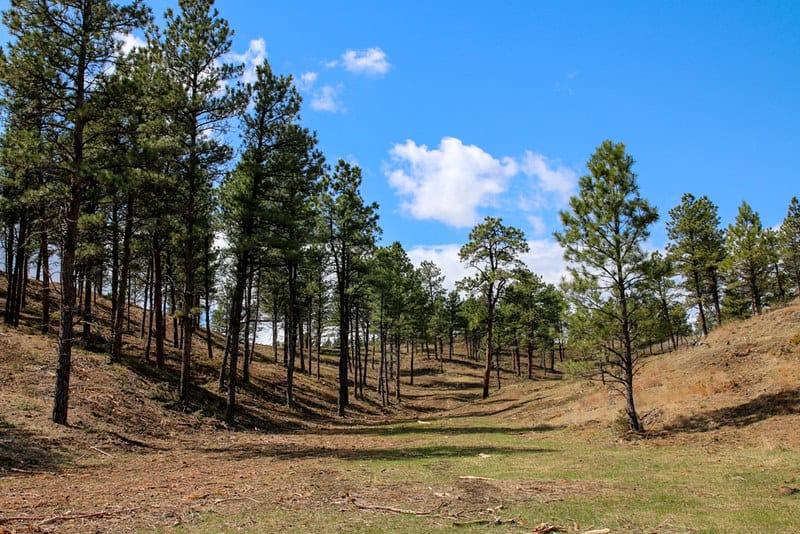
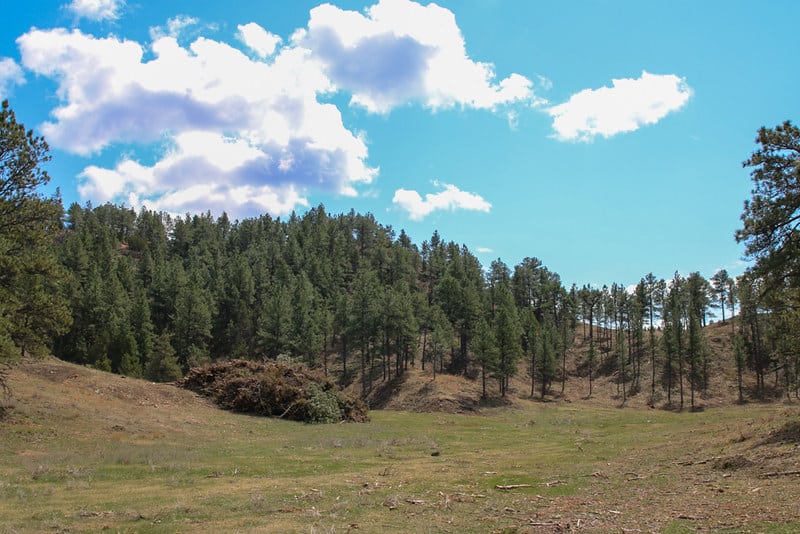
Meanwhile, cross-boundary collaboration in Custer County continues through the Pine Hills project, which aims to connect fuel treatments on private and county ownerships near other treated areas as one contiguous landscape. DNRC and partners are prioritizing the protection of neighborhoods and infrastructure, utilizing natural breaks in the forest fuels where they exist, partnering with neighbors to create larger fuel breaks by linking into existing or completed projects and providing stability to the local skilled contracting workforce needed to accomplish these fuel reduction goals.
In addition to Forest Action Plan funding administered through DNRC, funding from the Natural Resource Conservation Service (NRCS) has been instrumental in getting Pine Hills residents on board. Through NRCS Targeted Implementation Plans (TIPs) and Environmental Quality Incentives Program (EQIP) funding, the pooled resources maximize what the project can accomplish for the state and federal government, as well as landowners.
Our local producers, ranchers and residents are seeing the benefit of prescribed fire and other fuel reduction techniques.
Cory Cheguis

Additionally, the Bureau of Land Management and Custer County provided community assistance funding to homeowners associations and landowners for fuel reduction work, and a Landscape Scale Restoration Grant from the DNRC allowed local fire departments to conduct a prescribed burn in a county-owned park and on rangeland to reduce juniper encroachment and improve rangeland health.
“Our local producers, ranchers and residents are seeing the benefit of prescribed fire and other fuel reduction techniques,” said Custer County Fire Warden and Disaster and Emergency Services Coordinator Cory Cheguis.
Cheguis has observed more landowners beginning fuel reduction work in a chain-effect.
As much merchantable timber as possible is salvaged and sold to Windmill Ventures in Miles City, where it becomes firewood and boards to reduce project costs and support Montana’s forest products industry.
“DNRC is grateful to our partners who have demonstrated incredible collaboration throughout the past decade,” said Miller. “I look forward to helping more landowners take the first steps in taking care of their property.”
****