
Editor’s note: The Montana Department of Natural Resources and Conservation (DNRC)’s mission is to ensure Montana’s land and water resources provide benefits for present and future generations. This story was originally published by the Montana DNRC in November 2025 as part of the agency’s series of Montana Forest Action Plan project highlights. To learn more about the Forest Action Plan and read about other projects, visit DNRC’s Montana Forest Action Plan page. All images in this blog post are credited to the DNRC.
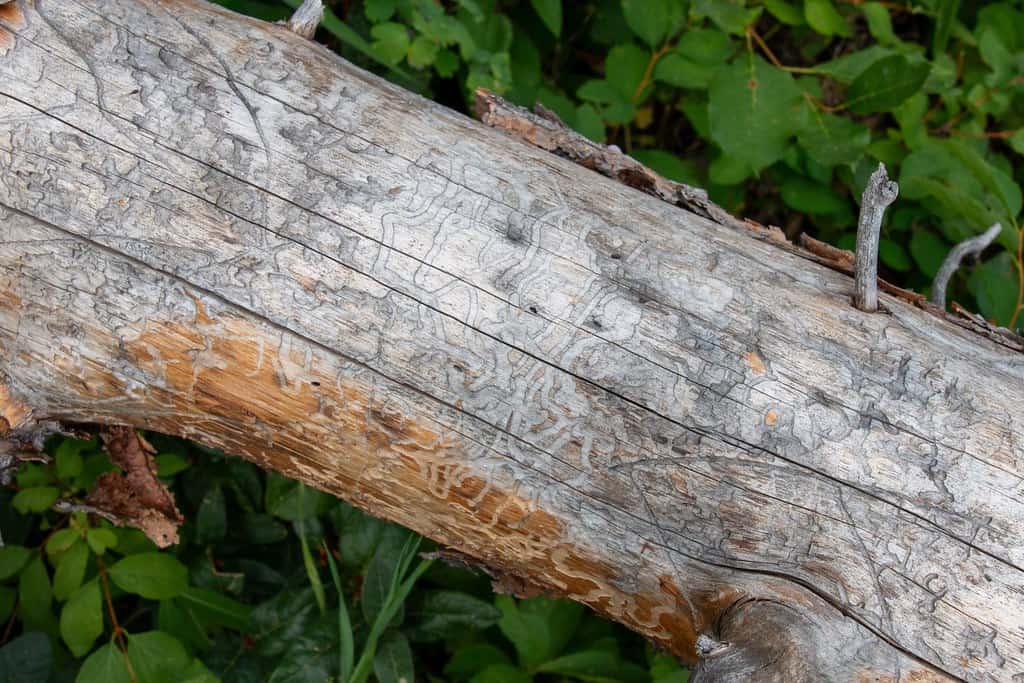
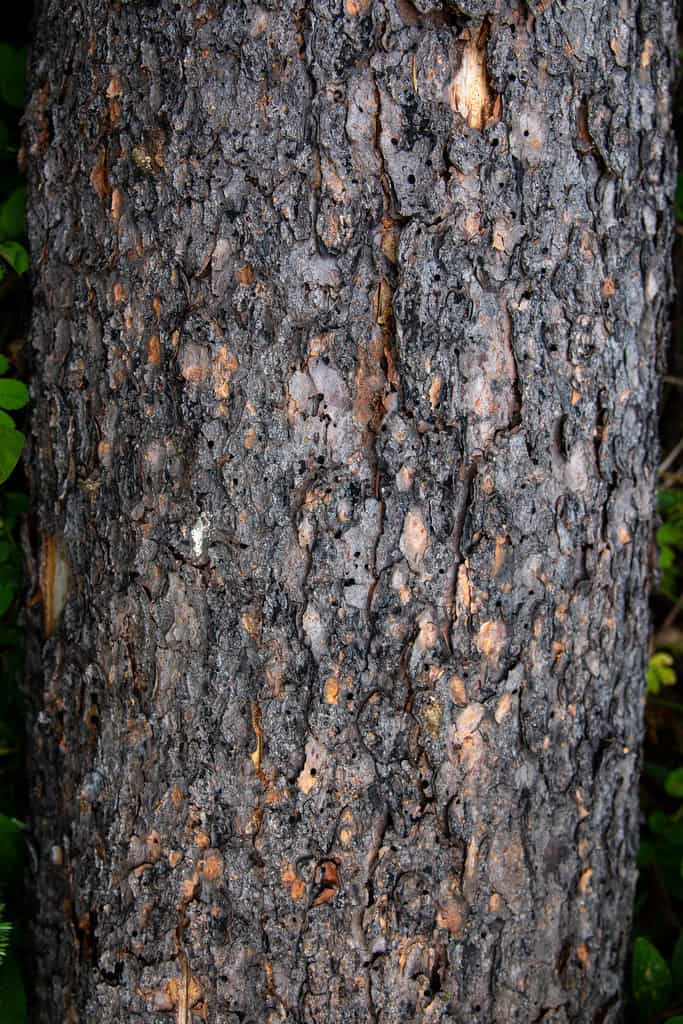
The Basin Creek Reservoir has been a primary source of drinking water for Butte, Montana residents since 1895. But in the early 2000s, the Basin Creek Municipal Watershed suffered significant impacts from mountain pine beetle following consecutive years of severe drought, resulting in standing dead and jack-strawed lodgepole pine across the forest floor. Forest health conditions continued to degrade in subsequent years.
In 2017, the $32 million Butte Water Treatment Plant was constructed to filter organic material and harmful compounds out of the water, making it safe for consumption.
However, poor forest health conditions put this plant at risk. Jim Keenan, Butte Water Treatment Plant superintendent knows a wildfire would be catastrophic.
“Our system would not be able to filter or process water that’s been impacted by a severe wildfire,” said Keenan. “If we had a wildfire within the watershed, the consequences couldn’t be more extreme.”
Wildfire impacts soil stability and increases runoff during precipitation. A single storm event following a high severity fire could introduce large amounts of soil, ash and woody debris into the upper and lower Basin Creek reservoirs, causing blockages downstream in the gravity-fed water treatment system.
The plant provides up to 60% of Butte’s municipal water supply, supporting over 34,200 residents. Keenan estimates a high-severity fire could cause the loss of the Basin Creek water supply for a decade or longer due to the watershed’s steep slopes and highly erodible granitic soils. Dredging, removing sediment and debris from the reservoir, would cost millions of dollars.
A contaminated water supply would mean the City of Butte would need to draw more water from the Big Hole River watershed southwest of town, which supports fisheries, recreation and agriculture and provides critical aquatic habitat for the Arctic grayling. Drawing more from the Big Hole would cause additional environmental and social impacts on natural resources in the area, as well as increased cost to consumers.
“These ‘what if’ scenarios might sound far-fetched, but the consequences of inaction would be extreme,” said Ann Parks, forester for The Montana Department of Natural Resources and Conservation (DNRC). “Wildfire seasons have become longer and more severe in Montana. It’s not a matter of if, but when a wildfire will spark in the Basin Creek Watershed.”
The Basin Creek project began in late 2020 after Keenan met with officials from DNRC and the United States Forest Service (USFS) Beaverhead-Deerlodge National Forest in the Basin Creek Watershed. The project area encompasses the upper Clark Fork Landscape, identified as a priority in the 2020 Montana Forest Action Plan, and includes the Basin Creek and Backyard Butte Management Areas.
“It was clear there was a lot at stake,” said Sean Steinebach, former DNRC service forester and current communications and outreach forester with Sun Mountain Lumber, who is still involved in the project as a co-chair of the Beaverhead-Deerlodge Working Group. “It brought many agencies, political representatives and institutions together in support.”
With the involvement of the Beaverhead-Deerlodge Working Group, Butte Water Treatment Plant, City-County of Butte-Silver Bow, USFS and DNRC, the Basin Creek Project became a true cross-boundary project, wherein state, federal and local municipalities work together toward a common goal, expediting and streamlining processes.
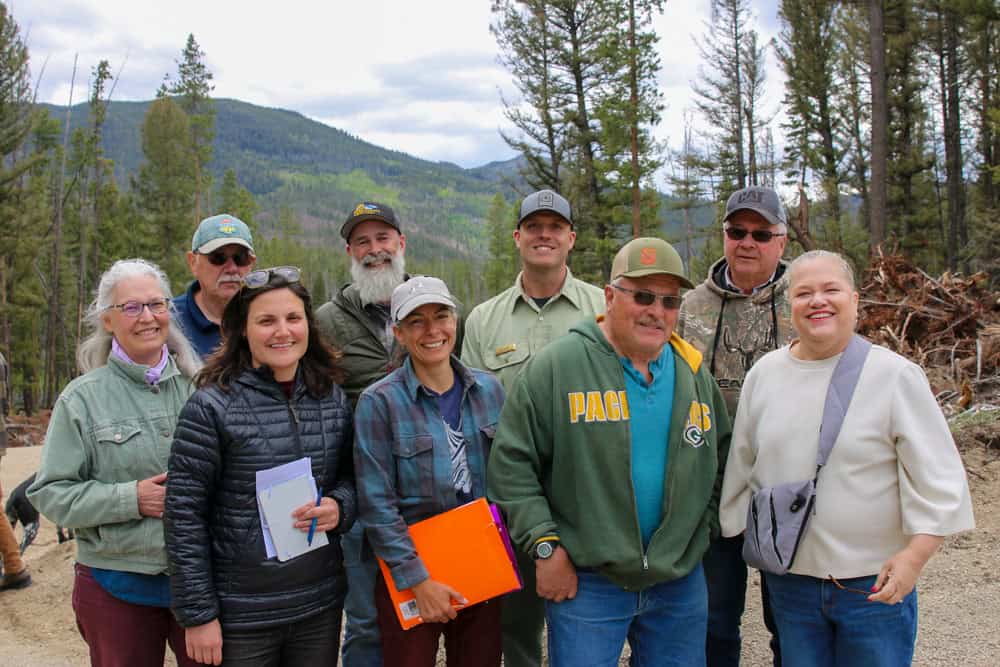
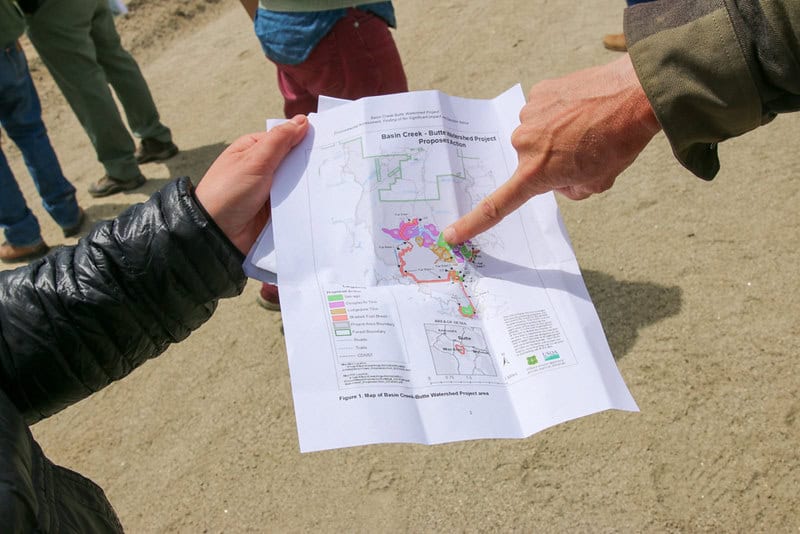
A major component of the project is DNRC’s Good Neighbor Authority (GNA) program, which allows the USFS and DNRC to execute forest management, wildfire fuel reduction and other restoration projects on federal lands. GNA helps the USFS treat more federal acres in Montana and gives DNRC a seat at the table for managing forests in a cross- boundary approach. Additionally, GNA bolsters the state’s forest products industry while reducing the costs to taxpayers.
DNRC has been instrumental in securing funding for fuels reduction work in the area thus far. The County, USFS and DNRC have spent months collaborating on a 2,350-acre draft proposal where the GNA program can be utilized to prepare and administer state contracts for the work done on federal land.
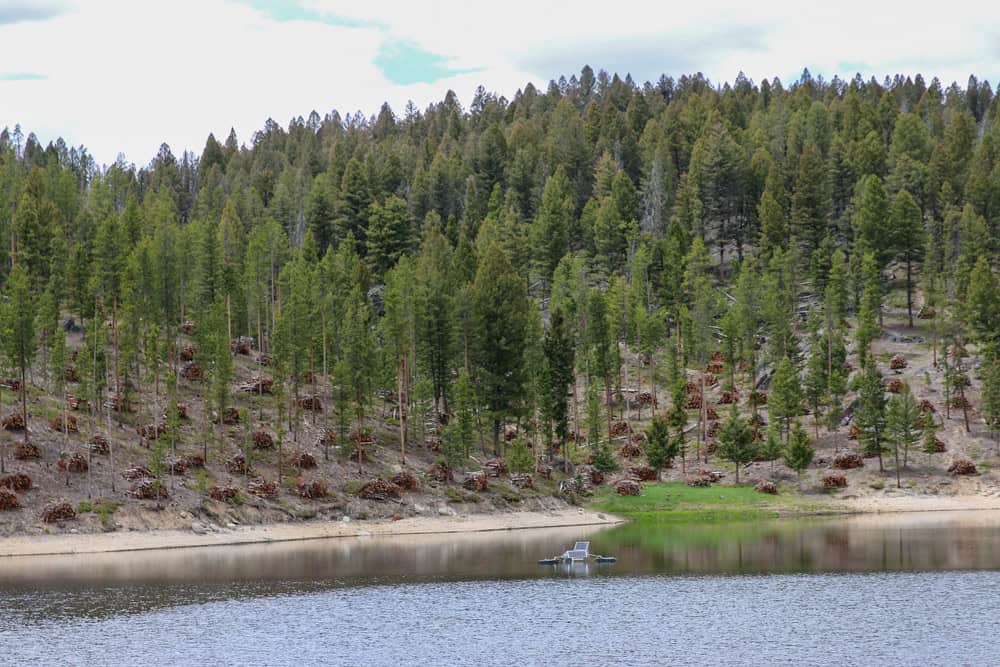
After corner surveys, road engineering construction and heavy maintenance were completed to access the project area, contractors and USFS personnel hand thinned, piled and burned 300 acres in the Beaverhead-Deerlodge National Forest in the fall of 2024 and early winter of 2025. Another 1,500 acres of mechanical fuel reduction are slated to begin in the fall of 2025, funded by USFS appropriations, a Bipartisan Infrastructure Law (BIL) award and state Forest Action Plan funding.
“The project is fairly complicated logistically because of the terrain, road access and more,” said Parks, who is leading the project implementation. “However, navigating these complexities is made easier because of the strong relationships DNRC has with Keenan, the county and Butte district ranger Tim Lahey. We can call on each other anytime for support.”
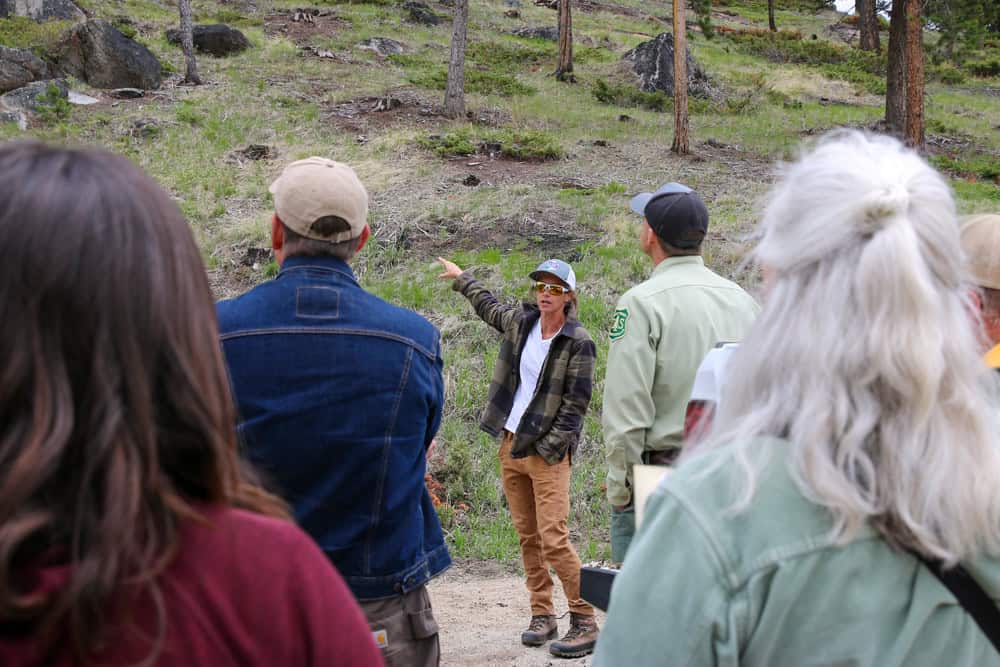
Directly adjacent to federal land, Butte-Silver Bow County has completed 34 acres of fuel reduction work on the east and south sides of the reservoir, tying into the contiguous, treated landscape within the watershed.
“To effectively mitigate fuels and wildfire concerns, work was needed on both county and federal lands,” said Tim Lahey, Butte district ranger on the Beaverhead-Deerlodge National Forest. “Neither agency could achieve the desired outcome for the watershed without multiple groups and agencies undertaking timber and fuels management together.”
The Basin Creek project has had overwhelming support from both local community members, elected officials and community institutions like St. James Hospital, as well as statewide and national support. Governor Greg Gianforte, current and former members of the Montana Congressional delegation, and Chief Executive of Butte-Silver Bow County J.P. Gallagher, as well as the current and former chiefs of the USFS, have visited the project site to witness swift progress on the ground.
Parks is proud to say the Basin Creek Project addresses nearly all of the goals and implementation strategies of the Montana Forest Action Plan.
“This project improves forest health, reduces wildfire risk and sustains cross-boundary work in the state, while also safeguarding a critical watershed,” said Parks. “It’s the right thing to do on the landscape.”
****
I understand that the logging contractor(s) on the Basin Creek job is/are staging on the lawn of Basin Creek Park. You may or may not know that the entire park, including the gazebo and residence, are listed in the National Register of Historic Places. I would like to speak with someone in charge at DNRC about what precautions the state and its contractors are taking to ensure that the lawn will be returned to its previous condition upon project completion. Sod replacement is almost certainly necessary, as I understand that the ongoing damage is not trivial and there is no irrigation system there to the best of my knowledge.