
Editor’s note: Ferin Davis Anderson is an enrolled citizen of the Turtle Mountain Band of Chippewa/Ojibwe/Anishinaabe/Michifs in North Dakota, an ecologist, and Natural Resources Manager at Shakopee Mdewakanton Sioux Community (SMSC) in Minnesota. She is also a member with the Indigenous Peoples Burning Network (IPBN). She recently published a book on the story of wildfire for younger audiences. All photos credit to the author.
When most people hear the word wildfire, they think about destruction.
They think about homes lost, smoke-filled skies, evacuations, and the headlines that appear during fire season. Those impacts are real, and they deserve our attention. But I wanted young people to have a more balanced understanding of fire, one that acknowledges both its risks and its role in the natural world.
That is why I chose to be part of the book Wildfire: The Culture, Science, and Future of Fire with Stephanie Sammartino McPherson, published by Lerner.
As an Indigenous ecologist, I wanted young readers to see fire discussed in a way that acknowledged both its power and its purpose. I also wanted to help fill a gap that I experienced growing up. Throughout middle school and high school, I never learned about wildfire. There were no lessons about fire ecology, Indigenous fire stewardship, or the important role fire plays in maintaining healthy ecosystems.
I often wonder how many young people today are growing up with the same limited understanding. If we want future generations to make thoughtful decisions about land stewardship, forest management, and community resilience, we need to bring these lessons into our classrooms and communities.
Fire Is More Than a Disaster
Hope Flanagan, an Indigenous elder, educator, storyteller, and cultural teacher with Dream of Wild Health, shared a beautiful and meaningful Anishinaabe word with me: Gaamadwekoneng.
She explained the word can be broken down as:
- Gaa: a tangible being
- Madwe: the sound that is made
- Ko: as it used to be
- Neng: a location
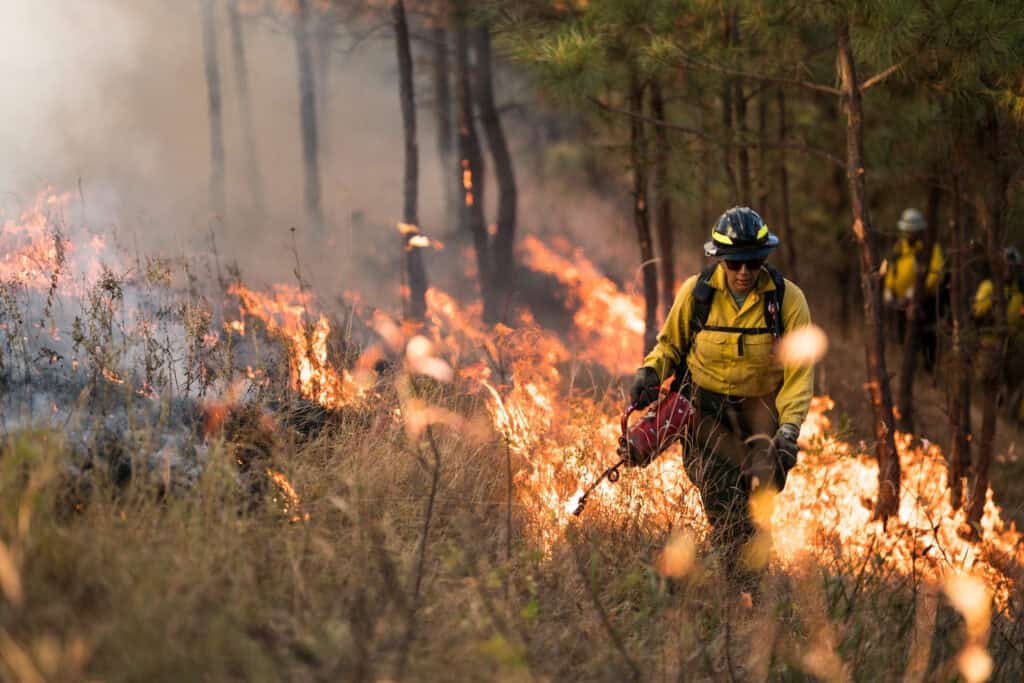
It is an old Anishinaabe word used for fire. Today, many Ojibwemowin speakers use the word Ishkode for fire. While both words refer to fire, Gaamadwekoneng carries an older teaching that reveals how our ancestors understood fire—not simply as an object or force, but as a tangible being with whom people had a relationship.
What struck me most was not simply the translation itself, but the worldview behind it. Fire was understood as a being. It was something people interacted with, learned from, and held responsibilities toward.
Today, many of us primarily encounter fire as a problem to solve or a threat to avoid. While those perspectives can be necessary, they are incomplete. We have spent generations distancing ourselves from fire, often forgetting that humans and fire have coexisted for thousands of years.
In many places, we have stopped acknowledging fire’s spirit and ecological role. As a result, we often struggle to understand fire as anything more than a threat.
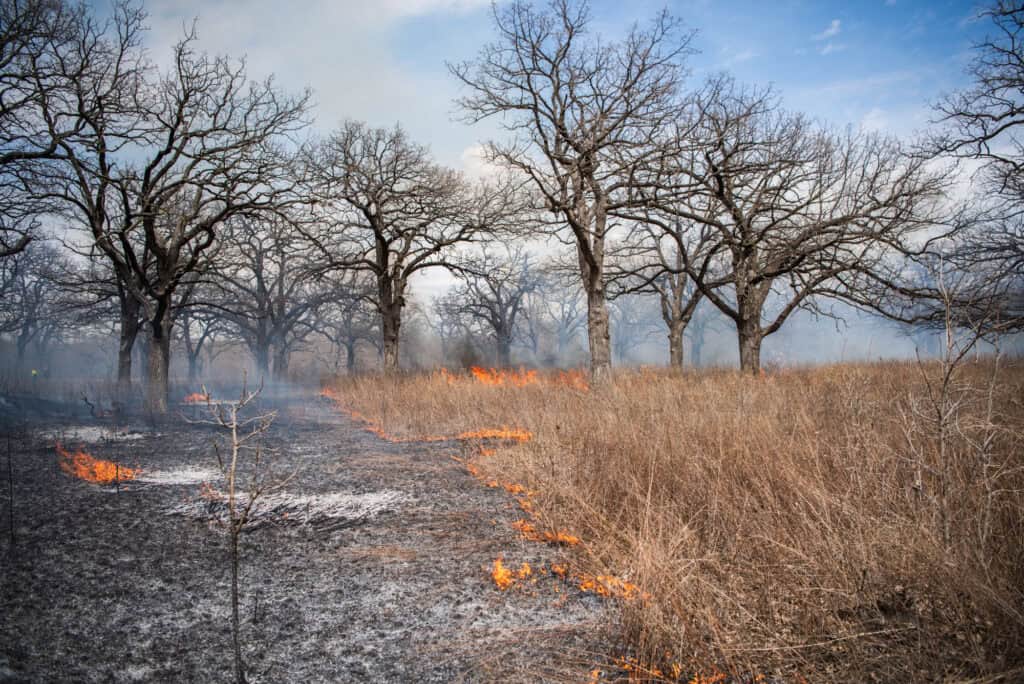
When people only understand fire through the lens of catastrophe, it becomes difficult to have conversations about prescribed fire, cultural burning, or the role fire plays in healthy ecosystems. Fear can leave little room for understanding.
I wanted Wildfire to help create space for a broader conversation, one that encourages young people to see fire as more than a disaster headline and to better understand its place in both ecosystems and cultures.
Teaching the Next Generation
One lesson I’ve learned throughout my career is that the best way to pass knowledge forward is to involve children. Whether those lessons happen in the classroom, around a campfire, on a field trip, or through a book, young people learn best when they are invited into the conversation.
Children are naturally curious. They ask questions adults sometimes overlook:
- Why do forests burn?
- What happened before firefighters existed?
- Why would someone intentionally put fire on the landscape?
- Why does one fire cause damage while another helps the ecosystem?
These questions create opportunities for deeper learning.
Many students graduate from high school without ever learning basic concepts about fire ecology or what it means to live in a fire-adapted community.
For practitioners working in wildfire resilience, this represents both a challenge and an opportunity.
If we wait until young people become homeowners, voters, or professionals before introducing these concepts, we have missed years of potential learning. But when we engage youth early, we help build a generation that is more informed, more curious, and better prepared to participate in conversations about fire.
I’ve also seen how children bring lessons home. A conversation that begins in a classroom often continues around a dinner table. A book read at school can inspire questions for parents, grandparents, and community members. In that way, teaching youth is often also teaching families.
A Different Kind of Resilience
When we talk about resilience, we often focus on fuels treatments, prescribed burns, defensible space, and community planning. Those efforts are essential. But resilience is also about knowledge.
It’s about ensuring important teachings are not lost and helping young people understand that fire is not simply an emergency event. It is also an ecological process and a traditional practice that has shaped landscapes for millennia.
For Indigenous communities, resilience also means maintaining relationships with the knowledge systems that helped our ancestors live with fire for generations. Those teachings remind us that fire is not separate from us. We have responsibilities to it, just as we have responsibilities to the lands and communities we care for.
Looking Forward
As wildfire practitioners, educators, and land stewards, we spend a great deal of time thinking about the next fire season. We should also spend time thinking about the next generation.
What do children understand about fire? What stories are they hearing? What teachings are they missing? How can we create opportunities for them to learn from elders, practitioners, cultural knowledge holders, and the land itself?
For me, Wildfire was one answer to those questions. My hope is that young readers come away seeing fire not only as something destructive, but as a force that has shaped ecosystems, cultures, and communities for generations.
Perhaps that begins with remembering a word like Gaamadwekoneng and the teaching it carries: fire is not just an event. Fire is a being, and like all meaningful relationships, it deserves our attention, respect, and willingness to learn.
****
I look forward to seeing this book and learning how it might be introduced to youth, well done!