
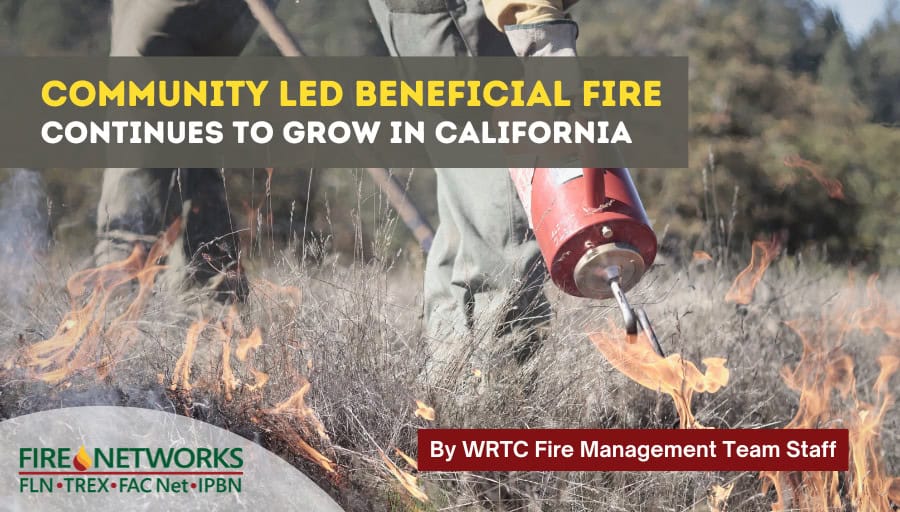
Editor’s note: The Watershed Research and Training Center (WRTC), based in Hayfork, CA, is a non-profit organization working to create meaningful partnerships for land stewardship and empower the local community. It is also the parent organization for FAC Net. WRTC’s Fire Management Program hosts hands-on trainings and cooperative prescribed burns across the state of California to engage partners and communities in long-term strategies that use fire as a natural land management tool. In this blog, staff share highlights from the recently published Community-Based Beneficial Fire Data Project 2025 Report, which compiled and analyzed data from beneficial fire burning activities across the state of California in 2025. Blog photo cover credit: Jenifer Mora.
2025 was an active year for the community-based beneficial fire movement. Across California, Tribal cultural fire practitioners, Prescribed Burn Associations (PBAs), nonprofit organizations, Resource Conservation Districts, agencies, and private landowners are continuing to build the relationships, skills, and policies needed to return good fire to the landscape. At the same time, a growing body of community-generated data is helping tell a more complete story about what this work looks like on the ground.
The latest Community-Based Beneficial Fire Data Project compares statewide data from 2024 and 2025, revealing more than numbers alone. It documents a movement that is growing in scale, strengthening its partnerships, and expanding workforce development capacity to care for California’s landscapes through cultural and prescribed fire.
Investing in people
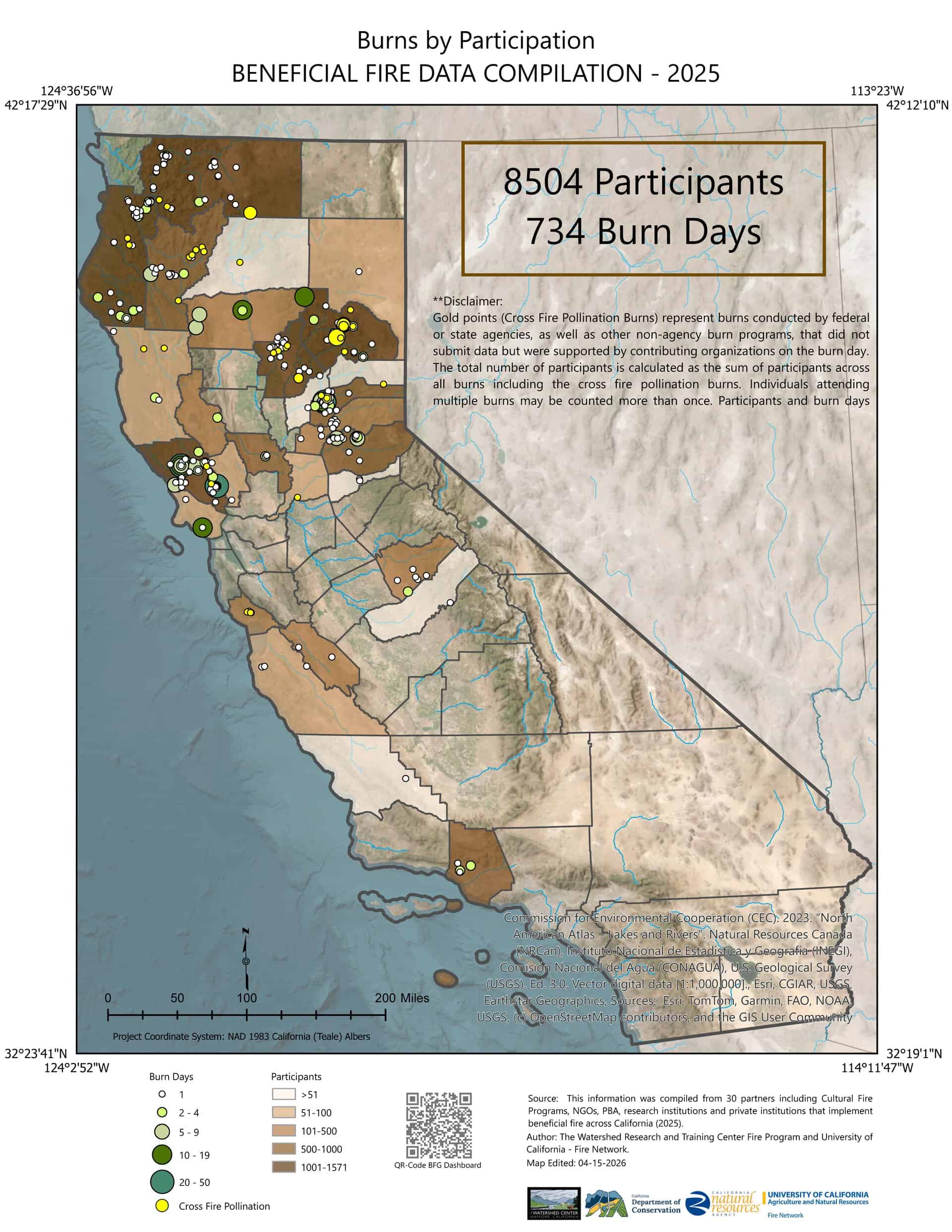
The Community-Based Beneficial Fire Data Project was created to tell the story behind community-led fire. Across 2024 and 2025, nearly 9,500 people participated in training events focused on prescribed fire, cultural burning, ecological restoration, and land stewardship. During the same period, community partners completed more than 1,280 prescribed and cultural burns, treating over 9,100 acres while engaging nearly 16,000 participants.
One of the strongest themes emerging from this year’s data is that community-based fire invests in people before it invests in acres. Training and workforce development programs bring together Tribal practitioners, firefighters, volunteers, students, landowners, nonprofit organizations, and agency personnel to learn from one another. Participants gain technical qualifications while also developing ecological knowledge, cultural understanding, leadership skills, and practical experience that strengthen local stewardship.
Most of these opportunities remain free or low-cost, helping remove financial barriers to participation. Many organizations also offer scholarships, leadership development, family-friendly programming, emergency medical training, and initiatives that make beneficial fire more accessible to different types of communities. This investment creates long-term capacity. Every new practitioner represents another person equipped to safely plan, support, or lead beneficial fire within their community. The California Department of Conservation, through the Regional Forest and Fire Capacity program, has provided substantial investment and support in this beneficial fire workforce development movement throughout the state.
Cooperation makes the movement possible
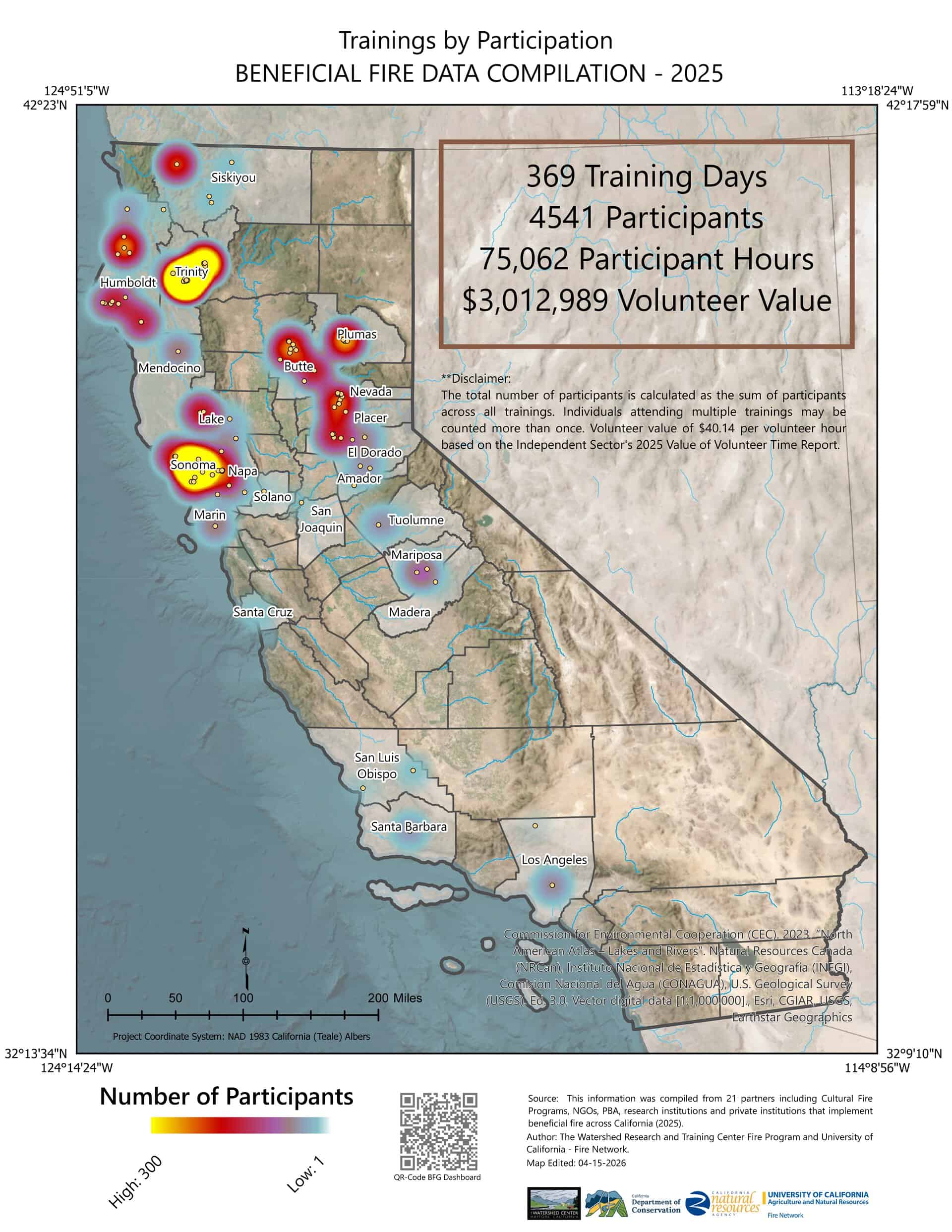
California’s beneficial fire movement is built on relationships. Practitioners routinely travel across regions to support burns organized by partner organizations, sharing equipment, experience, and personnel wherever burn windows open. This “cross-fire pollination” allows knowledge developed in one landscape to strengthen work in another while expanding opportunities for learning and mentorship.
In 2025, these partnerships supported dozens of burn days and thousands of additional treated acres through collaboration among community organizations, Tribes, and agency partners. This spirit reflects the “All Hands, All Lands” philosophy that has guided California’s beneficial fire community for years. Organizations are not simply increasing the number of burns—they are building trust, strengthening relationships, and creating a statewide network capable of responding to shared challenges.
Looking ahead
Two years of statewide data cannot answer every question, but the report clearly shows that California’s beneficial fire movement is gaining momentum. More organizations are contributing information, policies are evolving alongside practitioner experience, and communities are expanding their capacity to restore fire where it is needed most.
Important work remains. Expanding Tribal participation, increasing bilingual training opportunities, improving shared data systems, and sustaining investments in community capacity and workforce development will all be essential as the movement continues to grow.
Together, fire practitioners are demonstrating that beneficial fire is more than a management tool. It is a long-term investment in healthier landscapes, stronger communities, and a more fire-adapted California.
The work upon which this publication is based was funded in part through a Regional Forest and Fire Capacity award from the California Department of Conservation. The Watershed Center is an equal opportunity provider.

****