By Fire Networks Staff
This interview with Shannel Thompson is a part of our ongoing “My Fire Journey” interview series, in which we feature conversations with fire practitioners from a variety of backgrounds. These conversations are meant to offer a window into how practitioners approach their work, draw inspiration, and keep going in the face of challenges and setbacks. Interviews have been edited for length and clarity and represent the views and opinions of the interviewees
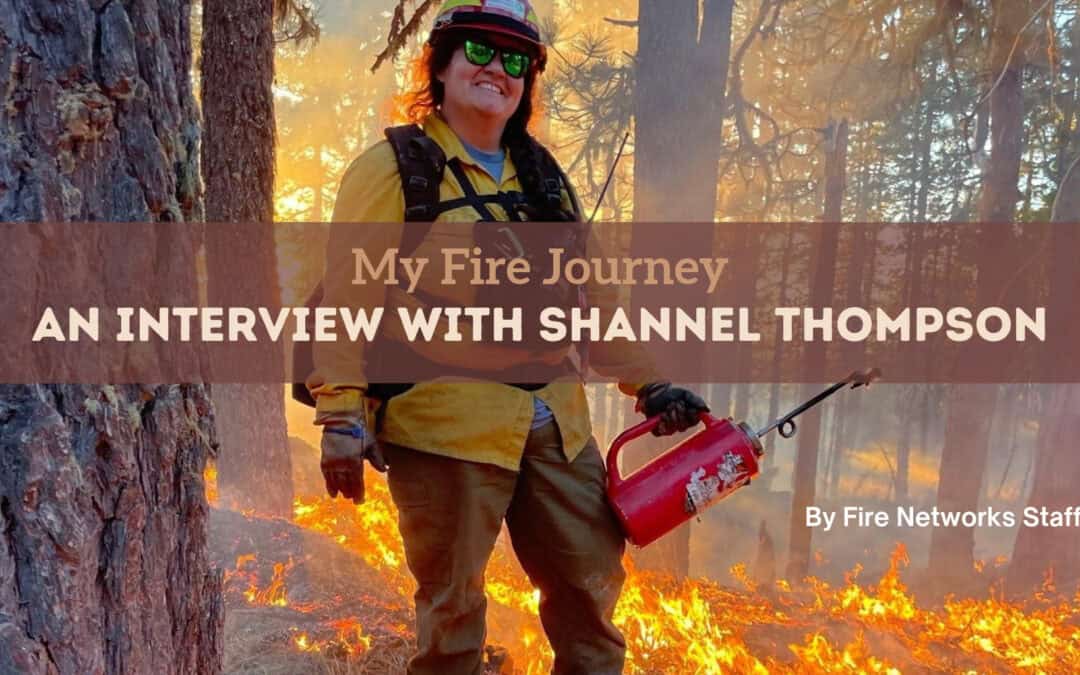
Shannel Thompson is Senior Burn Crew Member with The Nature Conservancy’s Tri-State Minnesota and Dakotas business unit. Shannel is a mother of two, a Leech Lake Band of Ojibwe Descendent, and, overall, a joy to speak and work with.
How did you find out about working in prescribed fire? How did you get into it?
The first time I heard about wildland firefighting was back in 2009. Robert Gotchie, my uncle, and my brother were all taking NWCG classes, and I thought, “That sounds really fun. I could do that!” But my boys were one and two years old at the time, so, being a single mom, there was no way I could leave them two weeks at a time to go on a wildfire assignment.
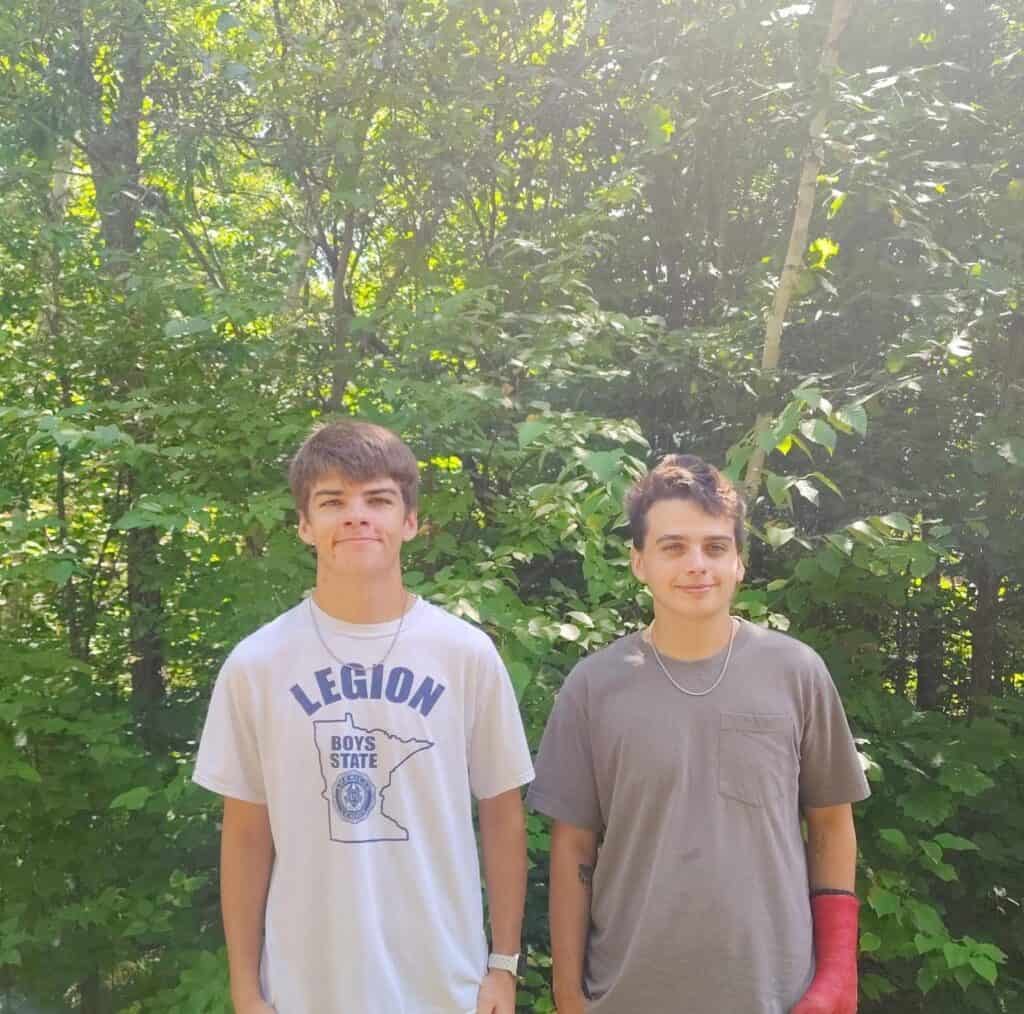
So, I sort of forgot about it for a while. But then in 2022, I was scrolling on Facebook, and I saw that the Leach Lake Tribal College was putting on a wildland firefighting class. At this time, my boys were 15 and 16 years old. I ran out to the kids’ rooms and asked, “Would you be okay if I did this? I’ll be gone for 2 weeks at a time or more.” They responded, “Heck yeah! Do it, Mom! Go, go see some places, go do it.”
Then I reached out to Robert and asked, “Hey, is this something you think I could do?” And he’s like, “Hell yeah, you could do that. By the way, I’m instructing that class.” It was really cool knowing he does this as his job and him believing in me, telling me I could definitely do this.
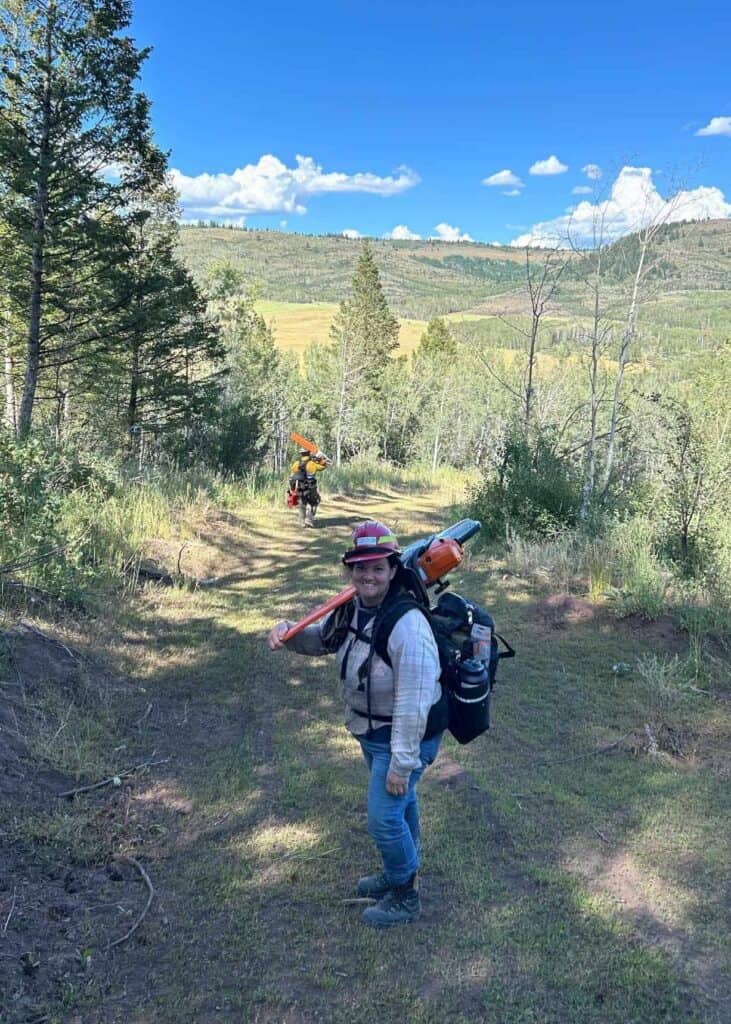
I went into it thinking that I was going to go and fight fires. I was going to go be a wildland firefighter. Then while I was in the class, Annette Drews, who worked for The Nature Conservancy, was in the class with us. She had a sign-up sheet for a TREX that was happening in Cloquet, so I signed up. At the time, I didn’t even know how to pack to go to Cloquet for two weeks. I didn’t know how to be gone from home, but I took time off at my current job to go. And then the TREX got canceled because of snow.
When the TREX was cancelled, Annette reached back out to me to say, “Hey, I’m going to give your number to Jeremy Bailey, and he’s going to reach out to you.” I was excited to have something I could do because I already took this time off from work and my shifts were filled. So, Jeremy called me and asked, “Do you want to go to Idaho in three days?” And I’m like, “Oh yeah!” But I didn’t even know how to pack to go to Cloquet, which is 2 hours from my house. Now you want to send me across the country? And he said, “Oh! I’ll get you a packing list.” So, Jeremy and Miranda Flora helped me prepare and sent me to Idaho for two weeks for my first fire assignment. Then I came back home and went back to my regular job, and then I went back out for two more weeks in Coeur d’Alene, Idaho.
I continued working my job in healthcare, and then I went to another assignment at the Tahoe National Forest. That fall is when North America Fire sent me to work with Bob Bale in Cushing, Minnesota. I worked the fall season with TNC, and then I went back to my other job. Finally, in the spring, I came back and I just stayed. They created a position for me to work with Marissa Wales, and I have been doing that ever since.
Are you glad that you ended up going the prescribed fire route? Do you ever still want to be a wildland fire fighter?
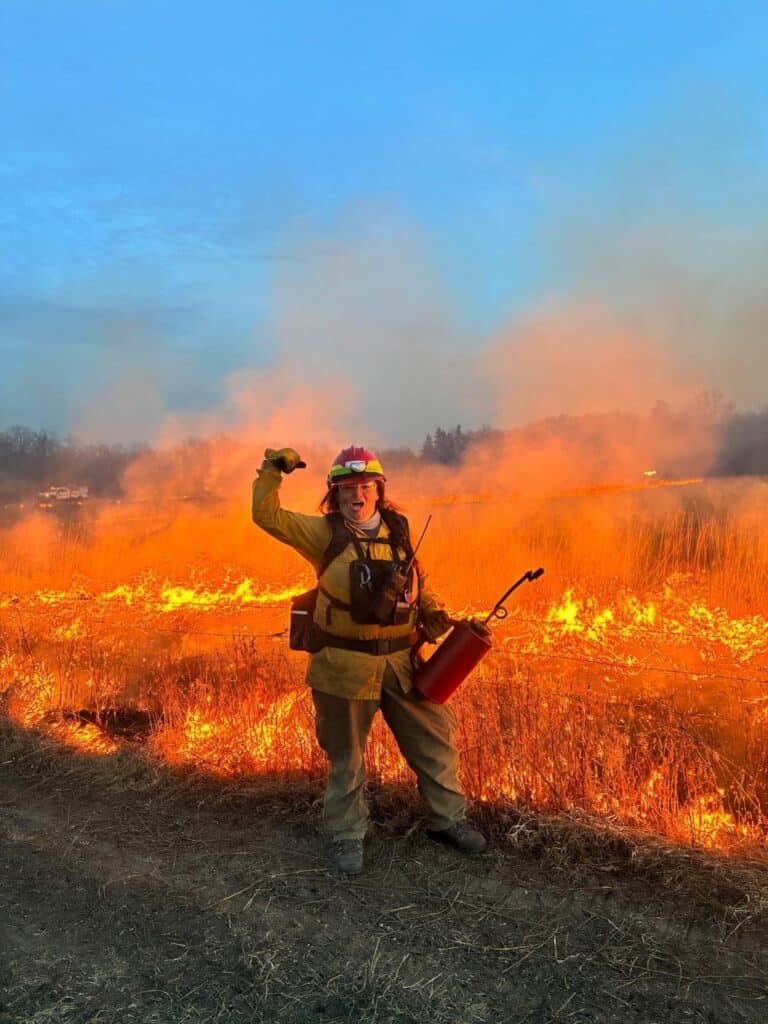
I definitely don’t have any desire to fight fires. I call myself a fire lighter, not a firefighter. People say, “You’re a bad a$$. You fight fires.” I’m like, “Actually, no, I light fires.” I’m here to heal the land. I’m here to do cool ecological things. It totally changed my perspective, big time.
How has being an indigenous fire practitioner impacted your fire journey?
I used to burn with my grandpa all the time when we were little, and that was just something fun. We got to go play with fire with my grandpa. I didn’t really understand what he was doing or why we were doing it or anything like that. Then, as I started to work in fire, I got to go to Grand Portage to do blueberry burns. I went to Six Rivers National Forest and got to do a burn for bear grass. We’ve done a blueberry burn in Fond du Lac Band of Lake Superior Chippewa. I’ve done some cultural burning in North Carolina with the Lumbee tribe. We have started the burns with pitch sticks or birch bark or quietly with no pumps running so we can actually listen to the crackle of the fire. Some of the fires we start with a ceremony. We’re getting smudged down and there’s prayer and there’s pipe being smoked. Every burn we do, I make sure to put out my tobacco before we start to pray for everybody to have a good burn, for everybody to be safe, and to let the mother know that we’re there doing what we’re doing. It just feels so good to be a part of, and I hope it becomes more and more of a regular thing.
I just got my FFT1 task book signed off in March in Florida. My supervisor recently asked me, “Where do you want your fire journey to go next?” And I’m thinking: Cultural fire. I want to do anything and everything that has to do with cultural fire. I want to be that bridge between the tribes to get good fire on their land. So, I think engine boss will probably be the next beneficial thing, so I think that’s where I’m going to head next.
What skills have been most beneficial for you in your career?
I think coming into this career with so many life skills has been really beneficial. I did not really know much about fire or how it works or anything like that but having a lot of other skills to bring to the team has helped a lot. I didn’t start firing until I was 37 years old. I’ve had many, many jobs, many different types of jobs and life skills I’d learned up until that point.
Also, I think just being approachable. Being a comfortable person that people can be around and talk to. I think learning people’s names goes a long way because I think it’s really cool when people learn my name – like you just meet them and then they address you by your name. I think that’s so huge. So, I make it a point to try to learn peoples’ names when we go to burns. Also, I try not to just stay in our little group. I go try to talk to these other groups that are all separated, introduce myself, and just start a conversation and then make more and more connections, which is really cool.
I also love taking group photos of all these cool groups that I get to be a part of. I can reference back through my phone through my fire journey, all these cool things, places and these people. It is just really, really cool.
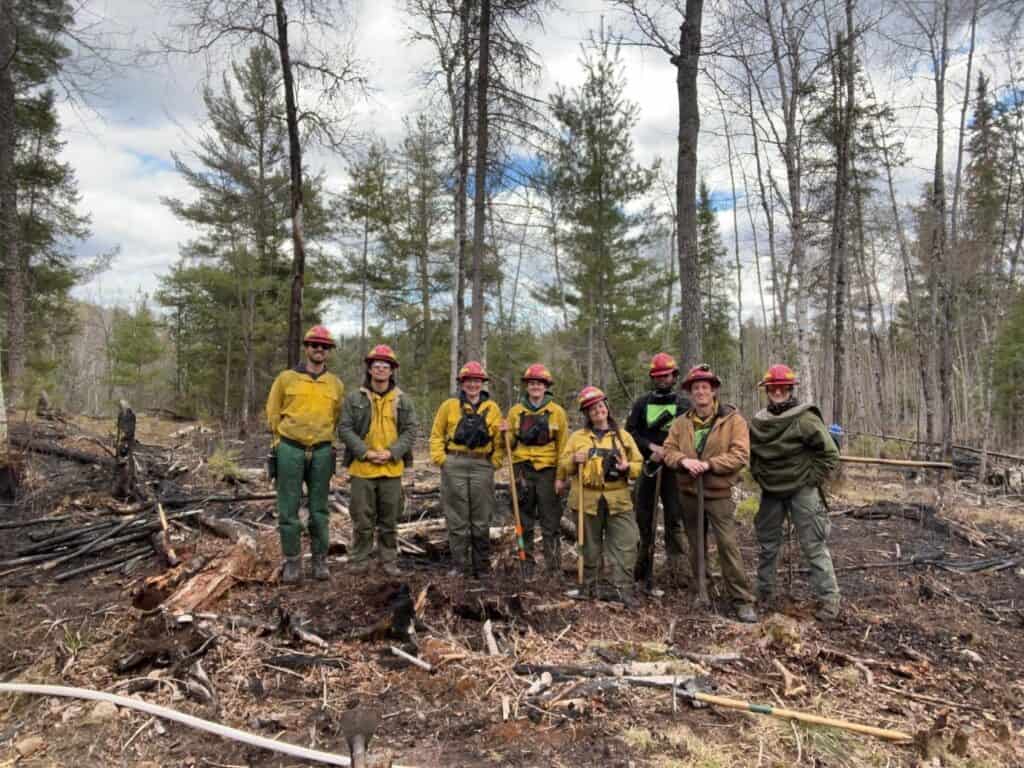
How do you handle a setback or challenge? And what keeps you in fire even when you’re faced with those challenges?
I take everything as a learning experience. Like even on the bad and the tough days, there’s always something to learn or to gain from it, even though it might be hard to see in that moment. It’s so cool just to be part of something so big, and it’s one way I can help give back to Mother Earth, to try to help heal her.
And, the people. I love my people. Having other people believe in you when you say, “Oh man, I don’t think I could do that.” They’re like, “Yeah, sure you can!” And then you actually do it. “Holy cow! I did that!” So, I think having just the huge support network I have of my family and then my work family is what gives me confidence.
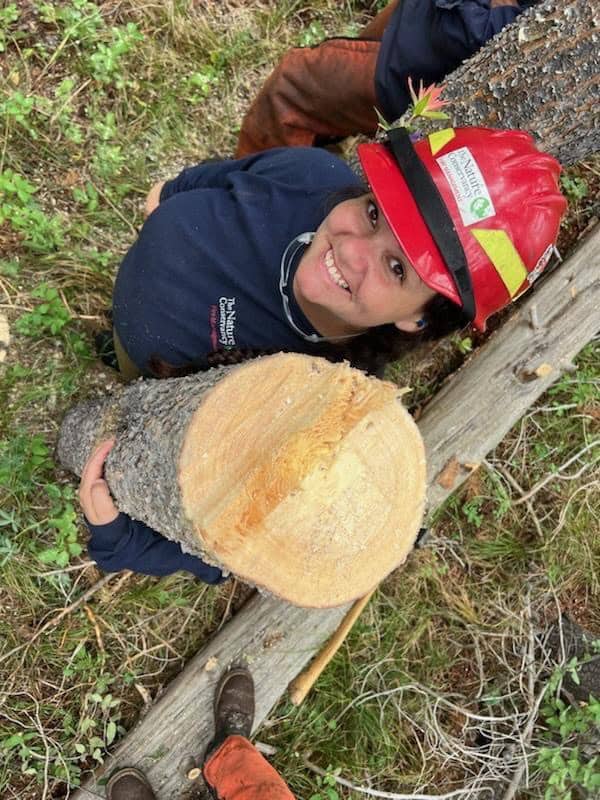
Who has influenced or supported your career trajectory?
Robert Gotchie, and my supervisor, Marissa Wales. Robert really encouraged me and taught me at the beginning. And Marissa has been my biggest supporter and has helped me grow through each season with grace and kindness. It just feels very comfortable with my supervisor because they’re a really great friend too.
And then I also just learned from everyone that I get to work with. That’s the best part of it because everybody you work with has something that they can teach you.