
Editor’s note: Jack Rinck is a prescribed fire specialist with the Montana Department of Natural Resources and Conservation and Fire Networks member. All photos credit to Ella Langer, Montana DNRC.
Blackfoot Valley TREX did not begin with rain, snow, or a hint of hesitation. It began with one of those gifts Montana occasionally offers each spring: a burn day.
Blue skies stretched over the valley. Winds were light. Fuels were drying. Sporadic, shock white clouds offered your imagination endless interpretations of what they could be. It was the kind of morning that lifts everyone’s mood the moment they step outside. A morning that feels less like weather and more like permission. What this Monday didn’t begin with, or the beautiful weekend preceding it, was simplicity.
Behind the scenes of Green Thumb, the name of a planned burn unit at the University of Montana’s Lubrecht Experimental Forest, a web of agreements and administrative details still needed untangling. The plan we’d spent months building suddenly required adjustment. So, instead of moving TREX forward together as one group, we split on this first day.
It wasn’t ideal, but it was the right decision. Half of the participants, mostly locals, checked in earlier than planned, and headed straight to the field to take advantage of the day’s weather window. Packs were loaded. Torches were mixed and filled. Radios crackled back to life after a winter spent silently in storage. The rest of us remained at Lubrecht’s main facility to check-in participants as they arrived from the wet, northwestern corners of Montana, or the state’s drier central and eastern plains, or neighboring states. Once arrived and accounted for we embarked on a tour of nearby burn units beneath the warm spring sun. It wasn’t the beginning we had envisioned, but it was a day that forced optimism into the sun-deprived souls of humans still shaking off winter’s grey.
Yet in many ways, it became the perfect introduction to what this year’s TREX (an acronym for Prescribed Fire TRaining EXchange) would demand from all of us: adapt and accept.
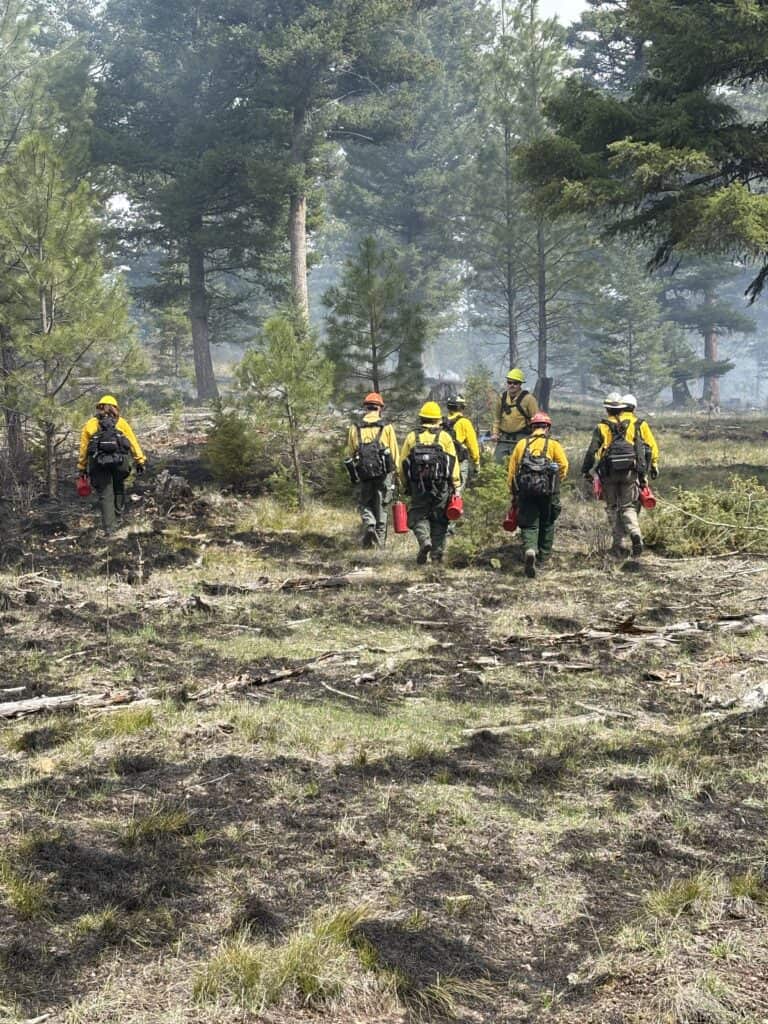
Fire practitioners spend their careers making decisions with imperfect information. Whether prescribed fire or wildland fire suppression, we work with shifting forecasts, changing conditions, and narrow opportunities. We learn to recognize a window when it opens, even if it opens at an awkward angle. TREX began with exactly that lesson.
By evening, the two groups reunited. Those who had burned Green Thumb returned dusty and grinning, carrying the unmistakable energy that follows a successful day outside. Those who remained behind gained an introduction to the countless moving pieces required to make fire happen safely, and hopefully, a deeper appreciation for the complexity of collaborative burning.
Over dinner, conversations stretched across tables. Strangers became acquaintances. Acquaintances became teammates. The familiar rhythm of the Blackfoot Valley’s second-ever TREX began to emerge. The next morning, that rhythm met the weather.
The blue skies vanished overnight. Participants scraped mud from their boots beneath thickening clouds that seemed to arrive with purpose. The beautiful conditions that had greeted us on our opening day disappeared as quickly as they had arrived. It felt like the sort of weather Montana keeps hidden away specifically for important, carefully planned events, just to make sure you really mean it – which we did.
From that point forward, TREX settled into a cadence shaped as much by weather and delicious food as anything else. Midweek turned to rain. Rain became sleet. Sleet became snow. Snow gave way to brief flashes of sunshine before turning back to rain again. Despite its inability to ignite, the snow brought inescapable beauty and led many to question their decision to leave cross-country skis at home. The forecast changed daily, sometimes hourly. By the weekend, we were used to the kind of precipitation that slowly works its way through every layer of clothing and makes a hot shower at the end of the day feel almost spiritual. Still, the learning never stopped. It simply changed form.
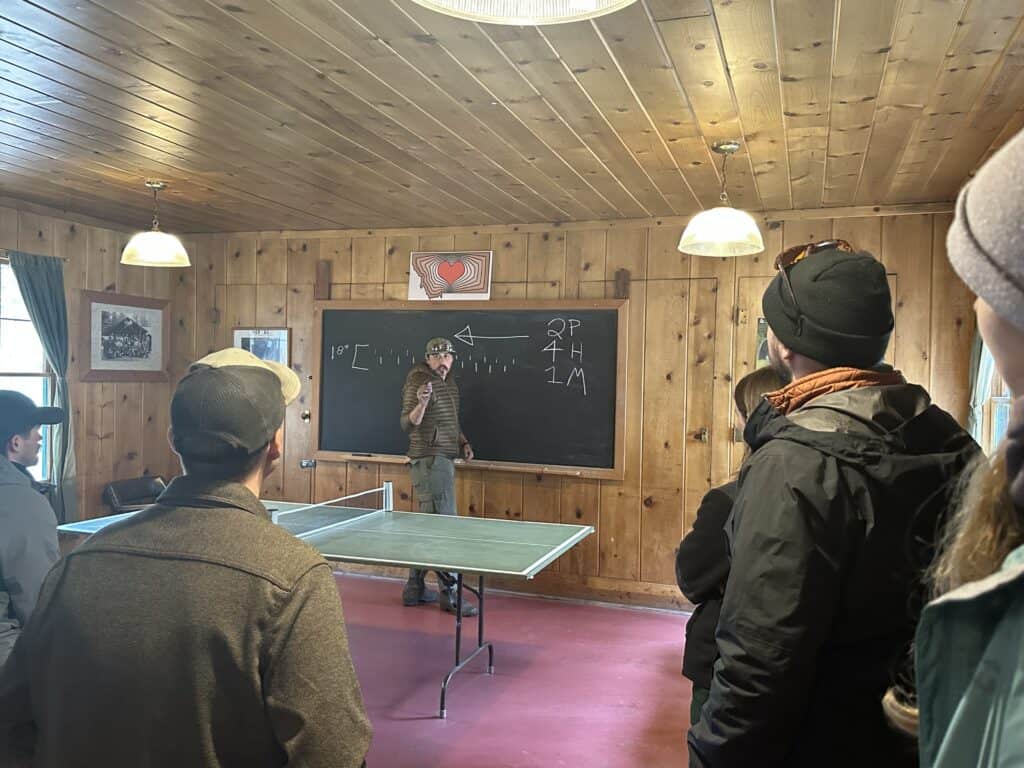
Inside Lubrecht’s classroom, presentations carried us through the days. Discussions of fire behavior, ecology, modeling, fuels, and cultural burning filled the room. A cohort of students absorbed S-219 Firing Operations. Researchers shared findings. Practitioners shared lessons learned. Local partners reflected on past projects and future opportunities. Piles were burned. Just as importantly, conversations spilled beyond the classroom walls into the unit tours, into morning jogs, into the backrow of trucks, squeezed together with knees touching. The damp weather opened new windows, not for burn units, but for conversations between new friends and colleagues.
Maps were unfolded over tables. New technologies were passed from one participant to another during breaks. Dozens of task books were signed, evaluations completed, squeezing the most out of our reality. Weather observations sparked debates during walks between buildings. Decades, if not centuries, of collective experience flowed naturally toward those just beginning their journey with prescribed fire. As important, questions from new practitioners challenged mindsets and entrenched practices of the most seasoned burners.
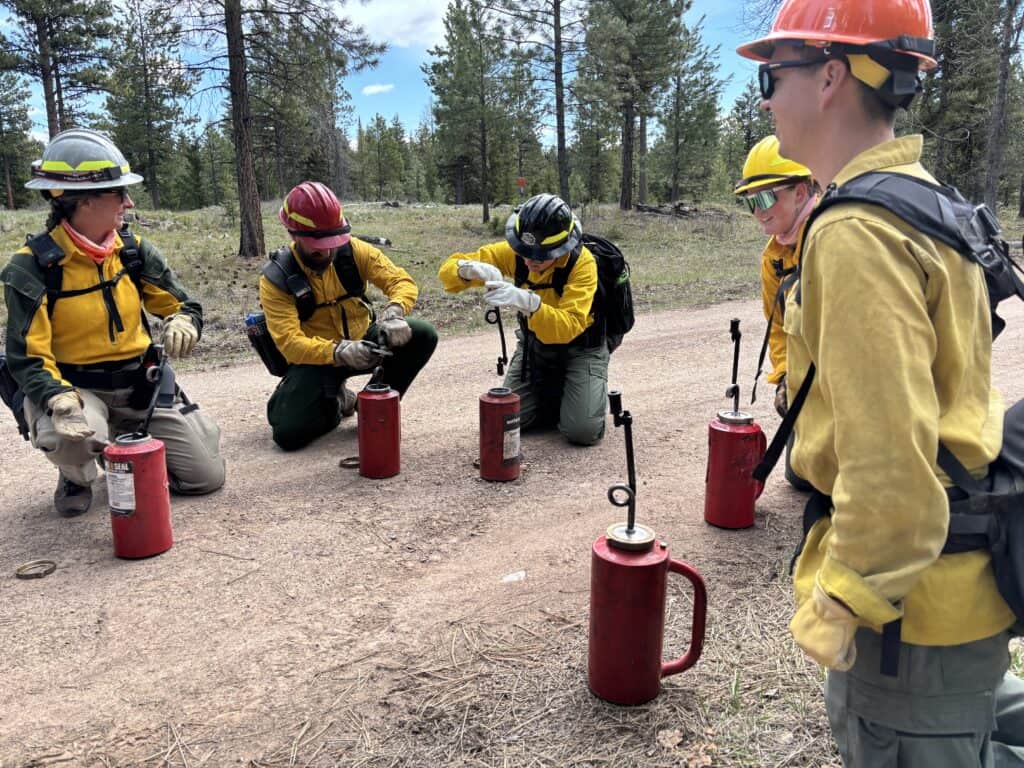
For a TREX that was never able to center itself around consistent burn operations, there was no shortage of learning. And yet, we still found opportunities. The window was thin, cold, and fleeting, but it was there. Conditions aligned just enough to invite fire back onto the landscape. Participants rotated through positions on ignitions, holding, engines, and weather. Small strips of flame crept through damp pine grass and snowberry, hovering on the edge of ignitability. Snowflakes drifted overhead while fire moved quietly beneath them. It gave participants what they had come for.
Our days were gritty and improvisational in the best possible way. People got their hands on pumps and tools. They practiced communicating through wind and static. They stepped into unfamiliar roles and learned alongside new friends. Every opportunity mattered because every opportunity felt earned. But eventually, the weather won with tightened forecasts and stubbornly wet fuels.
After several long planning discussions, and more hours than we would care to admit hoping that the next forecast aligns with our best hopes, we reached a difficult conclusion. It was time to end TREX early. No one wanted to make that call. Yet, no one argued against it once it was suggested.
What stood out most was not the disappointment, but the response. There was disappointment, sure, but also a sense of shared maturity. Participants understood. They recognized the same weather as we did. Ending early did not diminish what had been accomplished. If anything, it reinforced what this TREX is truly about: adaptability, judgement, and learning to read what the fuels are telling you.
As participants packed vehicles and exchanged final handshakes, the skies above Lubrecht teased us with occasional hints of sunshine but ultimately remained draped in clouds and drizzled, offering one final confirmation that we had made the right decision.
The mood wasn’t gloomy, and it felt more like an intermission than an ending. Because despite the weather, despite the shortened schedule, Blackfoot Valley TREX achieved something meaningful. People left better trained, better connected, and better prepared for the work ahead. Relationships were strengthened. Skills were sharpened. The foundation for future prescribed fire efforts grew stronger. Not just the foundation for burning. The foundation for collaboration, for collective competence, for the fire culture we are working to build in Montana.
As the week came to a close, it was tempting to grumble about the rain and the snow. About the fuels that never seemed to dry and the barrage of precipitation that always seemed to arrive right after we restored hope for another twenty-four hours – maybe the day after tomorrow!
Humans are good at that. We assign personalities to clouds and motives to weather. We convince ourselves the landscape is either helping us or working against us. The truth is simpler. Nothing was out to get us, and the landscape was simply being as it is. The rain fell. The snow came. The grass stayed wet. Spring unfolded exactly as spring sometimes does. What happened was what happened.
It wasn’t the TREX we imagined months earlier while drafting schedules and dreaming of long burn days beneath clear skies. But it was the TREX we earned. The TREX we learned from. The TREX we needed to sustain momentum. In its own muddy, snowy, and honest way, it prepared us for whatever comes next.
The next burn day will reveal itself. It always does. And when it does, we’ll be here.
****